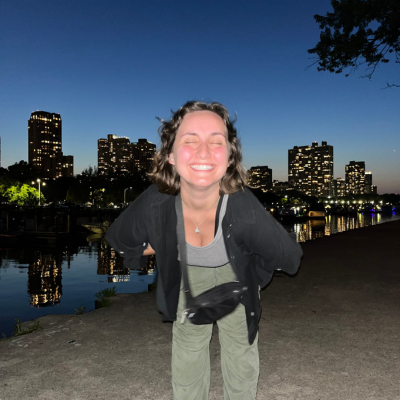
To preface, you must know that I love fashion. You wouldn’t know it by looking at me. I choose comfort first. I re-wear outfits constantly. I rotate between the same off-brand Birks and clogs depending on the weather. But my love for fashion lives in the craft. In the fiber, the cut, the history, the construction. I care about who designed something. Where it was made. Who made it. Who benefited and who suffered from the production. How it's impacted the environment. Which brands care about this and which don't. I watch runway shows. I get Vogue delivered. I sew. I crochet. I’ve even decided to relearn knitting at 26 after mocking my grandmother for it as a child.
For me, fashion is art and identity. What we choose to wear shows who we are and what we care about.
And this is exactly why the Brandy Melville documentary, "Brandy Hellville & the Cult of Fast Fashion" on HBO, hit the way it did.
Talk about a company that doesn't care who suffers from production as long as the stakeholders benefit financially... allegedly.
Brandy Melville is not just another fast fashion brand contributing to pollution and textile waste. It is a case study in how the modern fashion industry monetizes teenage insecurity, whiteness, and thinness, disguising exploitation as aesthetic culture while building profit on the bodies and identities of young girls.
When I was younger, I fell for Brandy Melville. I was a Tumblr-era teen. Thinness was currency. Aesthetic was identity. “One size fits all” felt exclusive in a way that made you feel chosen, if you fit it. Now, at 26, with seven gray hairs I refuse to dye, I absolutely do not fit into Brandy’s limited sizing. And that’s the point.
Brandy Melville didn’t just sell clothes. It sold belonging.
The documentary makes clear that the brand was built around a very specific image: skinny, white, blonde, wealthy, “California girl.” Girls were hired based on whether they had “the look.” Applicants, often minors, had to submit full-body photos and social media accounts. The prettiest girls were sometimes paid more, even if they were bad employees. Non-white employees were often placed in the back, stocking. Everyone knew what the standard was.
And yet everyone kept shopping there.
The founder, Stephan Marsan, whose name ultimately connects to the maze of individually owned storefront companies, curated this image obsessively. Daily “store style” photos of teenage employees were sent directly to him. Eventually, those requests escalated to chest and feet photos. Sixteen-year-old girls were being photographed and evaluated by middle-aged men. If he didn’t like how someone looked, they could be fired. As one former executive said: “They’re 16-year-old girls. You can find like 700 reasons to fire them.”
And this wasn’t just aesthetic obsession. Senior officials reportedly maintained group chats filled with racist jokes, swastikas, sexually explicit images, and demeaning commentary about women. They called them “juvenile jokes.” That word does a lot of minimizing for something so deeply rotten.
What struck me most was how the documentary almost underplayed this.
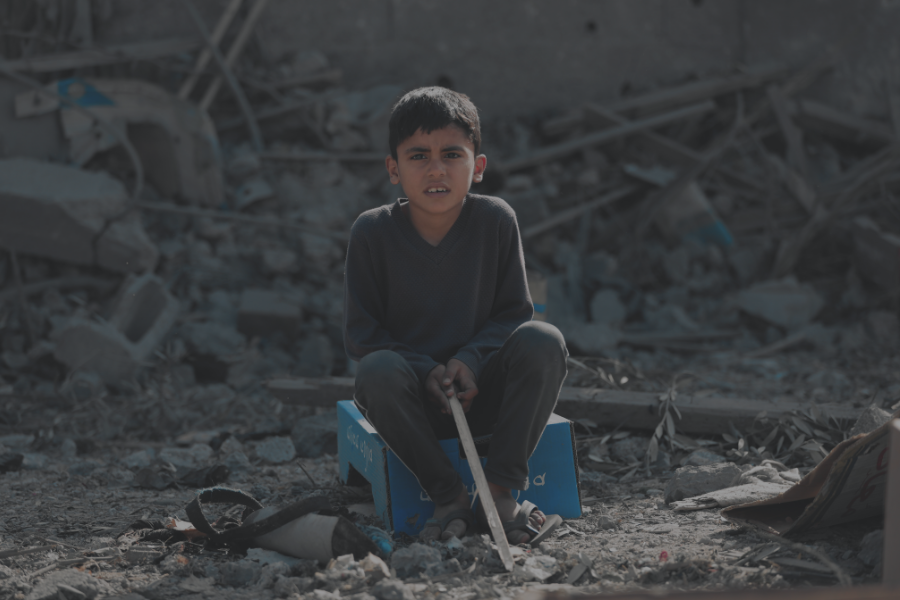
It leaned heavily into environmental damage (which matters). The U.S. and Europe consume roughly 36 billion units of clothing per year, and about 85% of that is discarded. Much of it ends up in places like Ghana, which has effectively become a dumping ground for unwanted fast fashion. Women there suffer permanent spinal damage carrying massive bundles of discarded clothing on their heads. Meanwhile, garment workers, often women of color in under-regulated factories, produce massive quantities of clothing for pennies.
This is real. Horrific, actually. The fashion industry, valued in the billions, is built on exploitation.
But Brandy Melville’s story isn’t just about fast fashion. It’s about a middle-aged white man building a brand that preys on teenage insecurity.
Fast fashion itself isn’t new. Zara popularized the thing in the 70s: quick turnaround trends, low prices, constant new inventory, essentially 52 “micro-seasons” a year. Brandy adopted that speed, but paired it with social media in a way that changed everything.
Here's where it got weird with a capital W. Teenage girls were marketing the brand for free. Instagram accounts, often run by adult men, posted endless photos of young girls. Social media removed the traditional fashion gatekeepers. No magazines. No editors. Just teenage girls becoming the aesthetic in real time.
“The reason why I liked it? I mean, because everyone else liked it,” one anonymous participant says in the documentary.
And that folks is the rhetorical machine that fed this dumpster fire.
Fashion equals identity for teenage girls. Brandy understood that. They manufactured scarcity (“one size”), desirability (“only certain girls get hired”), and social proof (“everyone is wearing it”). They even recreated outfits they saw on girls and produced them as new sale items, calling it “product research.”
While they were perfecting this model and watching their numbers rise, the harm multiplied.
Store employees reportedly felt pressure to stay thin to keep their jobs. Online forums were filled with girls discussing how to lose weight specifically to fit into Brandy clothes. Tumblr-era eating disorder culture collided perfectly with a brand that only made clothes for the smallest bodies.
Meanwhile, production practices blurred lines. Some manufacturing systems were moved to Italy so tags could say “Made in Italy,” even if supply chains were more complex. Individual storefronts were technically separate companies, creating layers of insulation, but all roads led back to Marsan.
The isn’t theoretical. There's proof and first-hand testimony of this exploitation. Former employees describe sexual coercion, abuse, unjust firings, and fear of speaking out due to immigration status or legal threats. Social media built the brand, and it later became the tool through which women shared their horror stories.
The proof is in the shares, but the sales haven’t meaningfully suffered.
And Brandy is not alone.
Shein, Temu, Cider, Fashion Nova, and more operate at an even more extreme speed and scale. Ultra-cheap clothing. Constant micro-trends. Outsourced labor. We’ve been talking about sweatshops for decades. “Not all factories are bad,” people say. Maybe. But there is no world where a $5 T-shirt reflects dignified labor across every step of its supply chain.
The quality of garments continues to decline. The volume increases. The waste piles up. The aesthetic cycles faster.
And teenage girls, again, are at the center of it.
This is what unsettles me most. Not just the pollution and the discarded textiles. Not even just the racist group chats.
It’s the normalization of adults building billion-dollar systems around the bodies and insecurities of children.
Brandy Melville wasn’t just selling crop tops and mini skirts. It was selling thinness, whiteness, and exclusivity, and it was monetizing access to it. It created a world where teenage girls competed to be the “right” kind of pretty while unknowingly fueling a business model that discarded both clothing and people just as quickly.
Fashion is supposed to be creative, expressive, and, like, fun!
But if behind the “fun” and “aesthetic” lies a structure built on exploitation of women’s labor, of women’s bodies, of teenage identity, and of entire countries turned into textile landfills then something is terribly wrong.
This problem is so big it makes me feel small. And pretending it’s just about sustainability misses the deeper rot.
At its worst, fast fashion isn’t just about waste.
It’s about power.
And who gets to profit from girls learning, very early, that their value is conditional.