Shaking hands, holding a rose silk gown being hand-beaded in the city of Beirut, while news stations ramble on about bombings in the South in the background. One bead after another is threaded precisely where the creator's mind has imagined it should go. This takes days and days to cover the entire corset, to move on to the detailing in the gown’s skirt.
This is Lebanese couture refusing to disappear in a world of conflict.
Lebanese designers have been creating the highest-end fashion through civil war, economic collapse, the 2020 port explosion, and now genocide. These designers pour their souls and identities into their creations; the proof is in the stitching.
Their designs are shaped by, hardened by, and made extraordinary by the complexity of their history and their people’s identity. Lebanese designers are the future of fashion.
While I say that Lebanese designers are the future, I also must tell you that they are the designers of now. Elie Saab. Zuhair Murad. Reem Acra. Tony Ward. And my personal favorite, Georges Hobeika. I am not lying when I tell you that his Bridal Fall 2023 collection alone makes me want to believe in love. I sit in awe every time I get a notification that his newest collection is live on YouTube for me to watch.
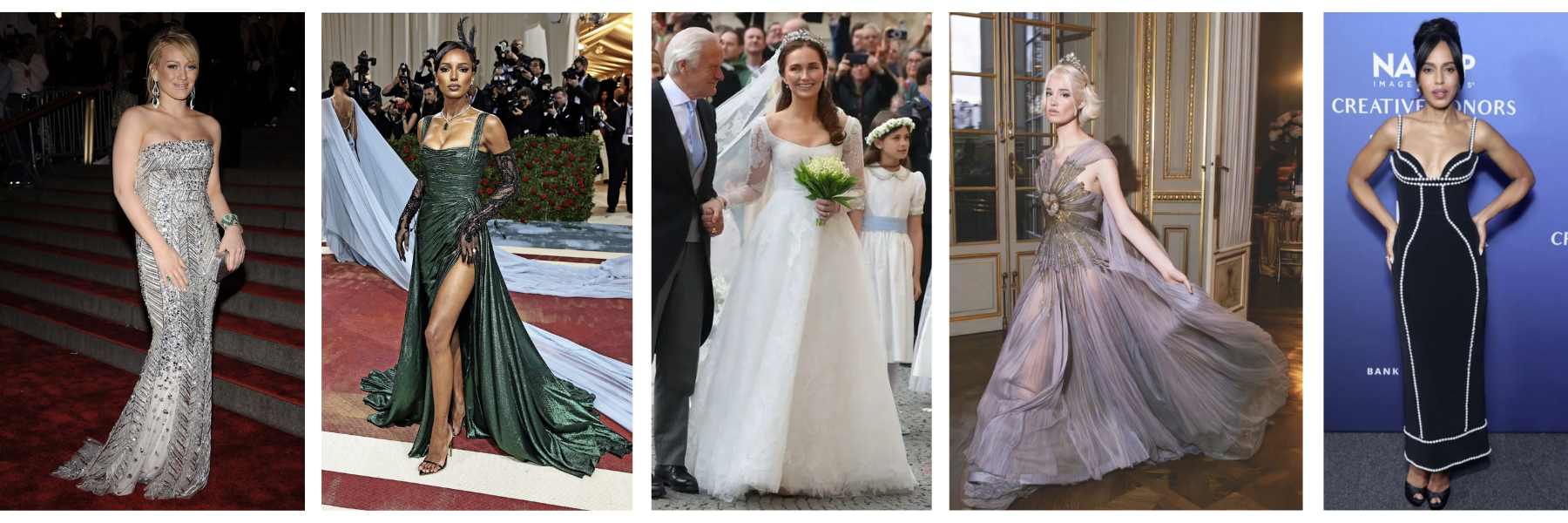
It is no shock that these designers are dressing royalty, heads of state, and the biggest names in Hollywood. Their work is at the highest level of global fashion, and it will be for many, many years to come.
Their craftsmanship and attention to detail are unique to their designs in a way that can only be intrinsic and cultural. Lebanese haute couture is rooted in a tradition of hand beading and embroidery. The painstaking precision with which they create their designs by hand predates the French fashion system entirely. It rivals methods we’ve worshipped in the land of global fashion for decades. So, where has Lebanon’s representation been in the global fashion framework?
Historically, global fashion has centered itself around a small number of Western European cities, such as the big four: Paris, Milan, New York, and London. The height of fashion trends has been regularly cultivated around the cultural aesthetic of these communities; it’s all very Eurocentric… and, well, white-centric.
The majority of houses and designers running these houses are white, and on top of that, most are men. The New York Times reported in 2023 that 85-90% of creative directors and similar positions are held by white individuals. Representation of people of color has historically been scarce, and in the great, big 2026, still is. While my favorite Lebanese designers all have amazing lines, they are few among the many right now. Despite being outside of that 85-90%, they are stepping into rooms that the system had not intended for them, and they are succeeding without fail. Their vision and identity are shaping the world of fashion despite those barriers.
When Lebanese designers are the ones setting the tone, dressing royals, and setting the stage for fashion trends, the world of fashion finally shifts away from that Eurocentric center. Lebanese designers are the ones developing the visual language of international state occasions, creating the outfits that the world sees their leaders wearing. This representation is bigger than just who gets to wear the clothes; it's who gets to make them and who gets to define the standard.
Representation in the fashion world should be created by demographics that live within those beauty standards, not white Europeans who see something they like on vacation and appropriate it. This is an issue in more regions than just Lebanon. Southeast and Southwest Asia regularly have their culture stolen in the name of “innovation” by the West. This is a centuries-long, worldwide issue, and today my focus is on Lebanon and the environment in which their creativity is born.
Lebanon’s capital, Beirut, is one of the oldest cities in the world and has endured through times of both prosperity and conflict. Ownership of the city changed hands over centuries, from the Romans, to Christian Crusaders, to the Ottomans. It wasn’t until 1943 that Beirut gained its independence. It became the political and trade hub of the Arab world, full of diversity. Unfortunately, tensions between groups rose over the span of twenty or so years, and Beirut endured a 15-year civil war. They reconstructed, and then in 2019, the city struggled with anti-government protests and the explosion at the Port of Beirut in 2020. Now, in 2026, as I write this, Southern Lebanon is being attacked by Israeli forces in their pursuit of Hamas.
Lebanon has undergone intense social and political strife over the decades, but its artists and designers continue to create culturally relevant designs that are unique to them alone. What they’ve built from their struggle is a particular aesthetic and cultural vision that cannot be recreated or manufactured in cities like Paris or New York. Their vision comes from somewhere specific, from the creative environment shaped by displacement, survival, and a defiant love of beauty. This is the source of Lebanese fashion.
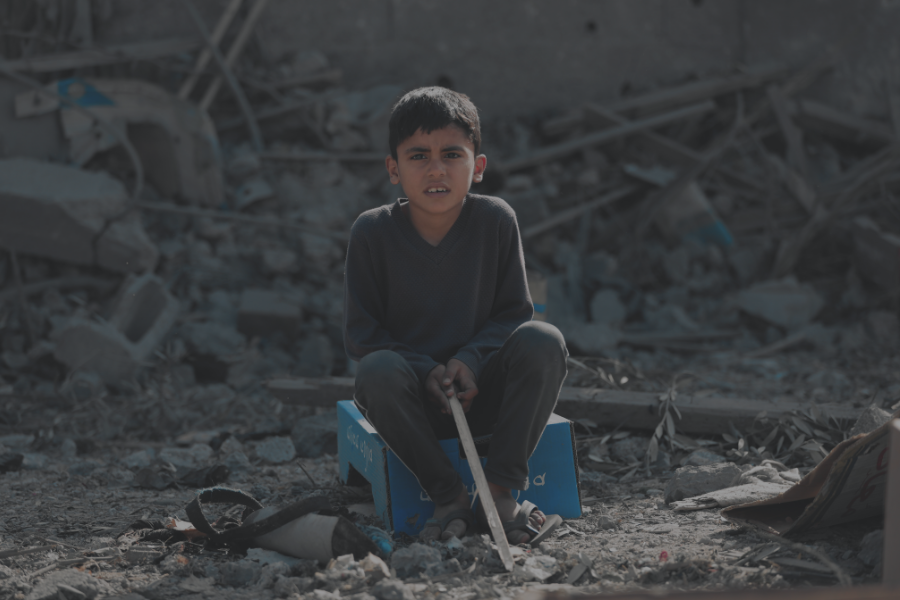
The violence being committed in South Lebanon has not yet been formally labeled a genocide by the United Nations or the International Court of Justice under the 1948 Genocide Convention, but the lack of a formal label doesn’t change the reality on the ground. The artists and creators of Lebanese fashion, which we so happily indulge in on the runway, in magazines, and on our favorite royal press tours and on red carpets, are living through this violence. The ateliers, the embroiderers, the pattern makers, the designers themselves, are living through this.
And yet, they compete within the highest realms of fashion, show the most exquisite, detailed, and thoughtful pieces I have ever seen, and continue to create and persist. They are activists as well as artists. Their creativity and devotion to beauty are a political act.
They refuse to be erased.
Fashion has long been a form of resistance. It is not just a metaphor of resilience and overcoming tragedy; it is a direct statement to those harming them, saying, ‘We are here. We are not going anywhere. And the beauty of our culture survives despite anything you do to us.’
And we are their audience. We all have to reckon with that every time we see their creative mark on the world. We all get to recognize how they’ve constructed something painstakingly extraordinary, while their country is being destroyed.
Just like present-day fashion giants, the future of fashion will be shaped by designers who come from places that have survived in the face of destruction. Who looked in the face of evil and decided to create anyway. Lebanese designers are not the future of fashion simply because they are trendy or because they’ve been handed their stage. They are the future because they earned that stage through the mastery of their craft and have proven that creativity as beautiful as theirs survives destruction, and that beauty is not a luxury for the few but a form of resistance for all that no amount of violence can ever fully extinguish.
(Read more about Beirut’s history here: https://www.ebsco.com/research-starters/geography-and-cartography/beirut-lebanon).