My fridge has seven large letter magnets, each in a different color, spelling out A-B-I-G-A-I-L. I stole them from my mom’s fridge when I moved into my own place. Left behind were her name’s magnets… all alone. But I also had plenty of single magnets sporting my name, Abigail. After all, Abigail was the 18th most popular name for newborn girls in 1999. Of course my name was going to be on every magnet rack at every kitschy store in Deadwood and Orlando! I was so used to seeing my name there that little Abi didn’t notice my mom’s name was never there. Or some of my friends’ names.
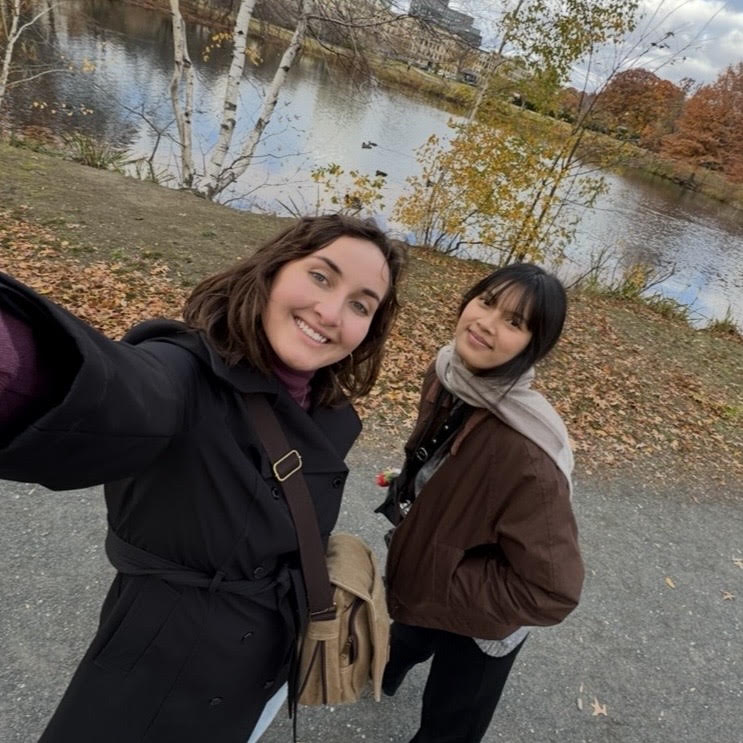
I’ve gotten stocking stuffers and travel souvenirs customized with my name. Charms, bracelets, shirts, name cards. You name it! (Hah!) My best friend, Mytien, got me a pin from the Museum of Ice Cream with my name on it. She sometimes sends me TikTok videos that associate my name with an aesthetic, a pigeon, or whatever random thing the TikToker chose to pair with a list of randomly picked names.
I never get to send them to her, though.
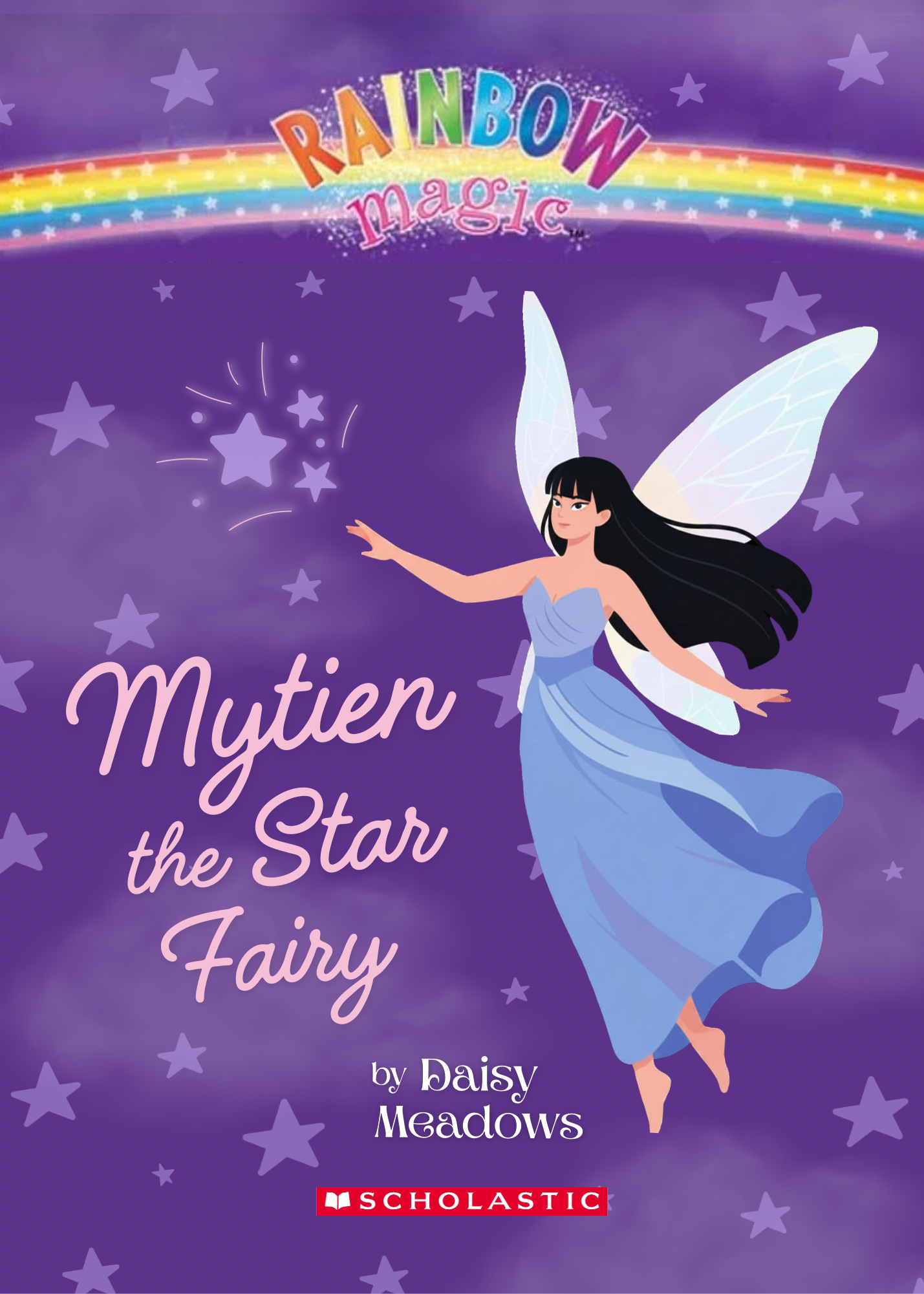
Earlier this year, the Magic Rainbow Fairy books became one of many social media trends, where everyone swore they looked just like their Magic Rainbow Fairy. Since 2003, there have been over 300 fairies, all with different names, in the Magic Rainbow series by Scholastic. Personally, I look nothing like Abigail, the Breeze fairy. And my sisters looked nothing like their fairies. And there were no fairies with names to match Mytien’s. I want her and every other little girl and boy to be able to find their name on the covers of books and on colorful keychains at the souvenir shop.
These novelty items aren’t endemic to the United States alone, but we are the only country that calls itself the “melting pot”. And our melting pot is simply not as Anglo-Saxon as these Rainbow Fairy books and name keychain souvenirs make it out to be. So why are all the names showcased Anglo-Saxon (and Western European, ish)?
Because those groups were historically the majority consumer base, since they were more likely to have the funds for such novel purchases, and the industry never updated its assumptions as the country changed and human rights stretched to include those of various backgrounds. The names on the souvenir rack reflect a specific cultural imagination of who a child in America is and whose childhood deserves to be commemorated on a piece of plastic or in the title of a book.
I took for granted that my name was findable, but little Mytien grew up learning that hers wouldn’t be.
It may seem like a small thing, and if we have typical white, Western names, we don’t think much of it, but seeing other little kids' names and never yours over and over can do something to a child’s subconscious. It teaches a child something about whose existence the world considers default, and whose is considered other.
And to anyone reading this thinking, “It’s not that deep,” or “Why does everyone have to make everything political?” My answer is this: I know. It's a keychain. But the keychain is not the point. The keychain is just where you can see the point most clearly, small enough to hold in your hand and cover in one short essay.
These keychains are an example of a bigger cultural assumption problem. I’m talking about the one where we, as a society, assume that Anglo-Saxon names are real names and everything else is exotic or difficult or unmarketable. We live in a society where it’s fine to mispronounce a name, sometimes even on purpose. Where it’s okay for your coworkers to mispronounce your name repeatedly in work meetings, where your boss can introduce you incorrectly to clients, where people insist on referring to you by an “Americanized” name, because they can’t be bothered to learn the proper pronunciation.
And in a world where human value is synonymous with job title, this issue becomes even bigger. It’s no secret that resumes get thrown out based on the name at the top, even if “technically they can’t” discriminate. Every woman knows it, and every person of color knows it. A non-Western/American name has the same effect.
The keychain rack is the childhood version of a systemic pattern.
Mytien is a beautiful name. It carries meaning in Vietnamese. In fact, according to my Google search, Mỹ Tiên means “beautiful fairy”. Vietnamese names carry history and identity. The assumption that a name like Mytien is harder or less real than a name like Abigail is a cultural bias in the U.S. (a country literally built by immigrants). Mytien’s name deserves a fairy too.
What would it mean for every child to find their name somewhere magical? Not for market expansion, but as an acknowledgement that every child deserves to feel that their existence is the default rather than the exception. I want all the little Mytiens of the world to look up at the bookshelf and see a Magic Rainbow fairy that looks just like them.
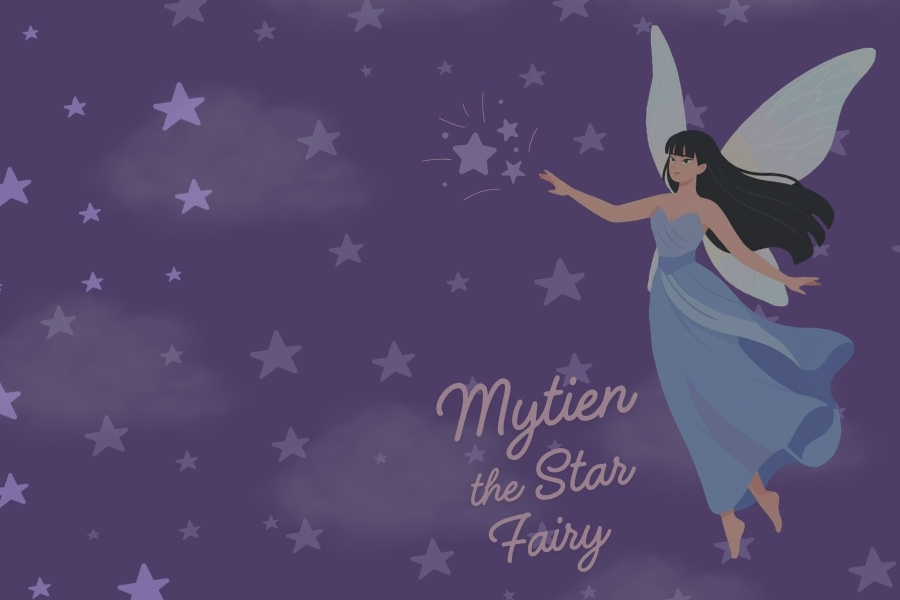
Her name means beautiful fairy, so I made her one. Mytien the Star Fairy, because she loves the stars. It took me five minutes and a free Canva account. It would take no time to include more names like hers.