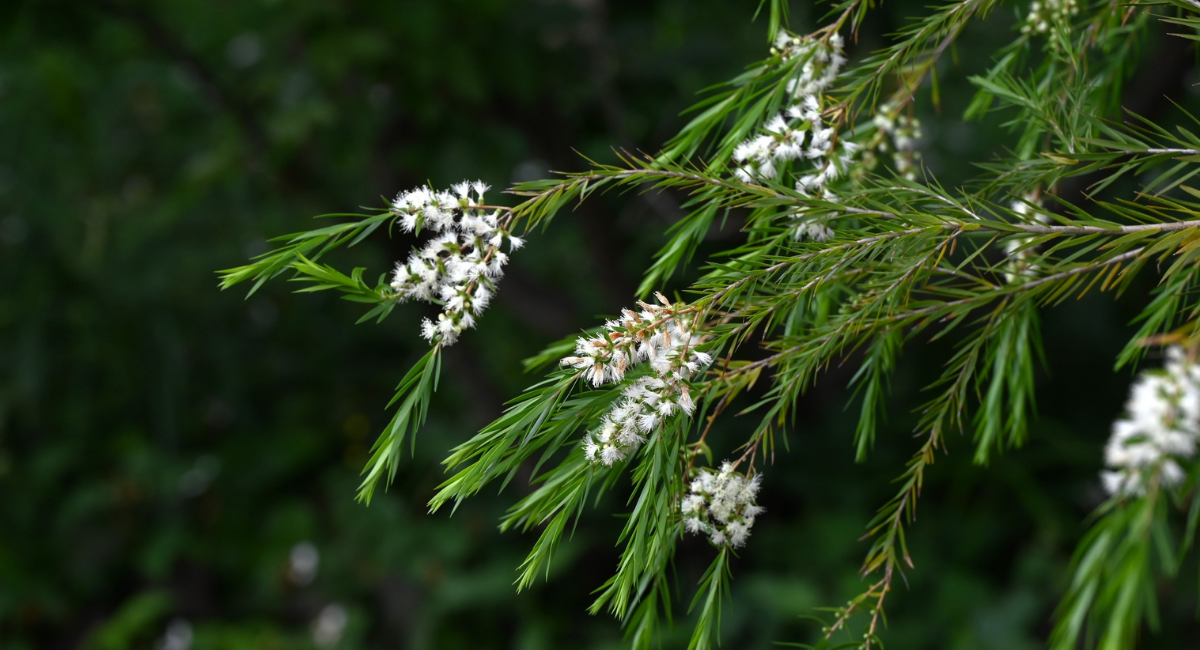
Antimicrobial, Antifungal, Antibacterial, Anti-inflammatory, Antiviral, Cough relief (inhaled)
Terpenoids (terpinen-4-ol), Essential oil

This Site is for Educational Use Only: The information on this page is for educational and informational purposes only and is not intended as medical advice, diagnosis, or treatment. I am not a licensed medical professional. Always consult a qualified healthcare provider before using any medicinal plants, especially if you are pregnant, nursing, taking medications, or have a medical condition.
Tea tree oil was a household staple at my Nana's house. Tiny cut? Tea tree. Bug bite? Tea tree. Any perceived threat to skin integrity whatsoever? She was already reaching for the bottle. It would dry our skin out something fierce but in her mind that was a small price to pay. She was right too... I suppose. I now carry tea tree oil in my purse. I am becoming her. Nobody tell her.
Tea tree has a long history in Aboriginal Australian medicine, where the leaves were crushed and inhaled or infused to treat infections. It's both antifungal and antiseptic, which covers a impressive range of everyday skin situations. Bug bites, small cuts, acne (used sparingly! unlike my Nana), and fungal issues are all fair game. For acne specifically, a little goes a long way and the keyword is sparingly. It will dry your skin barrier out if you go overboard, and a compromised skin barrier is its own problem you don't need.
Some people use it for ear infections by dabbing a diluted amount on a cotton ball and holding it near the ear rather than putting anything directly inside. There are also diluted preparations and even suppositories used for vaginal infections like thrush. For anything in that territory please dilute properly and be smart about it. Your girl is sensitive down there and deserves careful treatment accordingly.
Safety note: Tea tree oil cannot be taken internally. Contact dermatitis is possible, especially in concentrated amounts, so always dilute and patch test first. More is not more with this one.
Melaleuca alternifolia (Tea Tree) Oil: a Review of Antimicrobial and Other Medicinal Properties https://pmc.ncbi.nlm.nih.gov/articles/PMC1360273/
Tea tree oil https://www.mayoclinic.org/drugs-supplements-tea-tree-oil/art-20364246
Tea Tree Oil https://www.nccih.nih.gov/health/tea-tree-oil
Herbal Remedies by Andrew Chevallier
Disclaimer: The content on this website is provided for informational and educational purposes only and is not a substitute for professional medical advice, diagnosis, or treatment. No provider-patient relationship is created by use of this site. The author makes no representations regarding the accuracy or completeness of the information and assumes no liability for any adverse effects resulting from the use of plants or remedies described herein.

Who wrote it? What are their credentials? Who published it and why? A wellness blog and a peer-reviewed journal are not the same thing, even when they say the same words. Always click through to the original source.

Science updates over time. A 2003 study on a supplement may have been contradicted twelve times since. Always look for the publication date and whether newer research exists. "Studies show" means nothing without a timestamp.

Who funded the study? A supplement company funding research on their own supplement is a conflict of interest. It's not automatically a disqualification, but worth noting. Look for the "funding" or "disclosures" section of any study you read.

Not all research is equal. A randomized controlled trial carries more weight than a case study or an animal study. "A study found..." could mean ten people in a lab or a decade-long population study. Big difference.
If only one source is saying something, be skeptical. If ten independent sources across different institutions, different countries, different decades are saying the same thing, you're getting warmer. Consensus is earned, and studies should be peer reviewed.

The National Institutes of Health database (PubMed) is free and searchable. Examine.com aggregates supplement research without selling anything. Both are significantly more reliable than any wellness influencer, including me.