Soothing, Anti-inflammatory, Demulcent
Polyphenolics, Mucilage

This Site is for Educational Use Only: The information on this page is for educational and informational purposes only and is not intended as medical advice, diagnosis, or treatment. I am not a licensed medical professional. Always consult a qualified healthcare provider before using any medicinal plants, especially if you are pregnant, nursing, taking medications, or have a medical condition.
Research pending
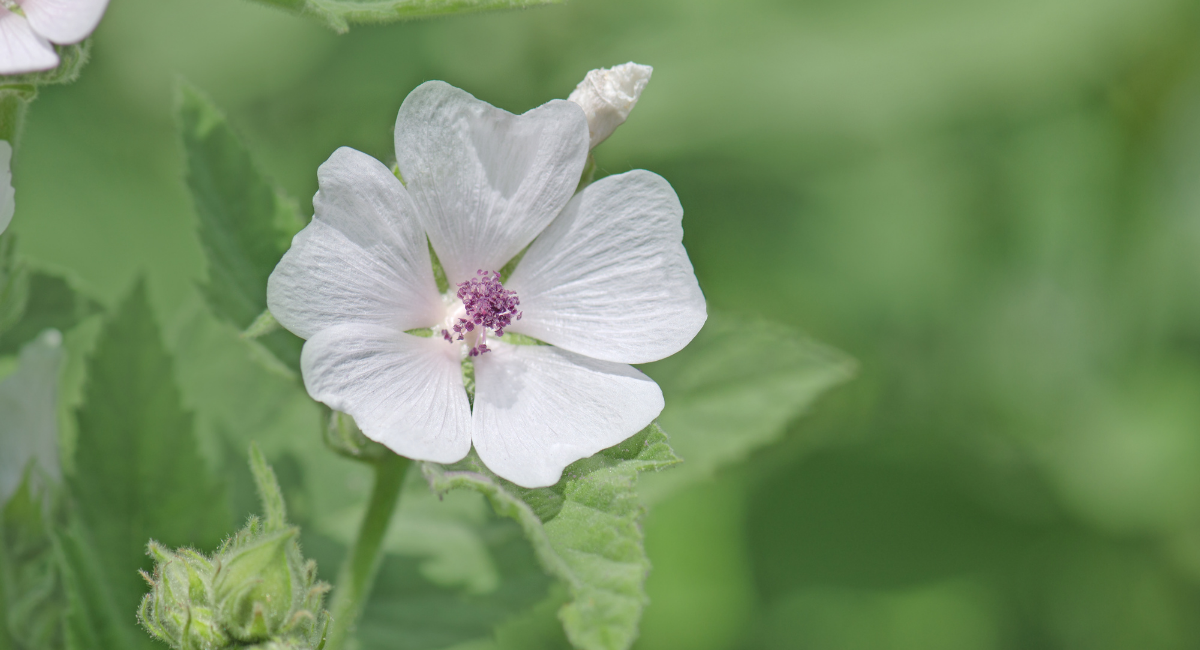
You guys. I love this one so much. Marshmallow, and no, not the candy, although the plant is actually where the original marshmallow confection came from before the food industry decided to replace it with corn syrup and disappointment.
Marshmallow root is one of my personal favorites for throat support and I will tell you exactly why: I mix it with licorice root as a tea and my throat basically sighs with relief. If you don't want to do the DIY route, there are several throat coat teas on the market that already combine the two in a convenient little pouch. Highly recommend for the next time you're sick, singing too much, or just generally falling apart.
The magic here is in its mucilaginous quality, which is a fancy word for the fact that it gets kind of sticky and gel-like when it interacts with water. Gross? A little. Cool? Absolutely. That stickiness essentially mimics the body's own mucous and coats and protects irritated mucous membranes all the way down the digestive tract. Too much stomach acid, irritable bowel syndrome, general digestive irritation: marshmallow root is in there doing its thing like a little soothing coat for your insides.
The leaves have their own role too, offering anti-inflammatory benefits. And ointments made from different parts of the plant can help heal and soothe irritated skin topically.
It's also just a food, which I always find delightful. Medicinal and edible. Yum.
Safety note: Marshmallow root has a remarkably clean safety profile with no significant known side effects for most people. The main interactions to be aware of are with diabetes management and lithium, so if either of those apply to you, check with your provider first.
Anti-inflammatory and Anti-oxidative Effects of Phytohustil® and Root Extract of Althaea officinalis L. on Macrophages in vitro https://pmc.ncbi.nlm.nih.gov/articles/PMC7090173/
Marshmallow root: Althaea officinalis L., radix https://www.ema.europa.eu/en/documents/herbal-summary/marshmallow-root-summary-public_en.pdf
Herbal Remedies by Andrew Chevallier
Sacred Herbs by Opal Streisand
Disclaimer: The content on this website is provided for informational and educational purposes only and is not a substitute for professional medical advice, diagnosis, or treatment. No provider-patient relationship is created by use of this site. The author makes no representations regarding the accuracy or completeness of the information and assumes no liability for any adverse effects resulting from the use of plants or remedies described herein.

Who wrote it? What are their credentials? Who published it and why? A wellness blog and a peer-reviewed journal are not the same thing, even when they say the same words. Always click through to the original source.

Science updates over time. A 2003 study on a supplement may have been contradicted twelve times since. Always look for the publication date and whether newer research exists. "Studies show" means nothing without a timestamp.

Who funded the study? A supplement company funding research on their own supplement is a conflict of interest. It's not automatically a disqualification, but worth noting. Look for the "funding" or "disclosures" section of any study you read.

Not all research is equal. A randomized controlled trial carries more weight than a case study or an animal study. "A study found..." could mean ten people in a lab or a decade-long population study. Big difference.

If only one source is saying something, be skeptical. If ten independent sources across different institutions, different countries, different decades are saying the same thing, you're getting warmer. Consensus is earned, and studies should be peer reviewed.

The National Institutes of Health database (PubMed) is free and searchable. Examine.com aggregates supplement research without selling anything. Both are significantly more reliable than any wellness influencer, including me.