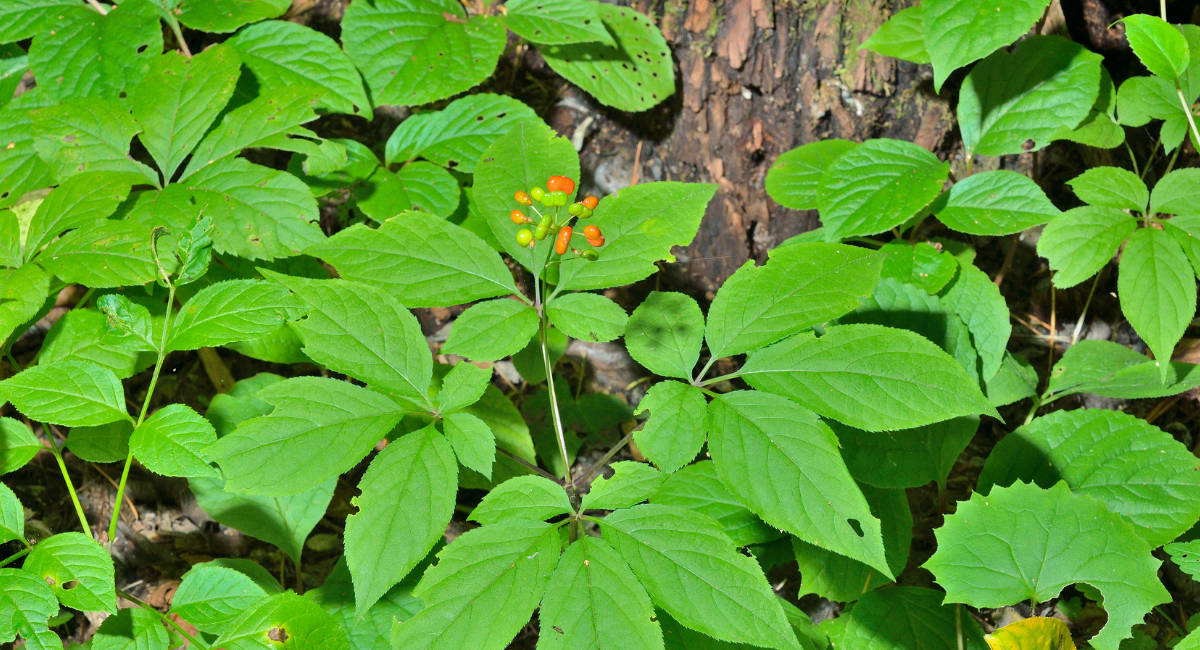
CNS stimulant, Analgesic, Anti-inflammatory, Immunostimulant, Cholinergic
Glycosides (ginsenosides), Saponins, Terpenoids, Essential oils, Vitamins (B, D), Minerals (calcium, iron)

This Site is for Educational Use Only: The information on this page is for educational and informational purposes only and is not intended as medical advice, diagnosis, or treatment. I am not a licensed medical professional. Always consult a qualified healthcare provider before using any medicinal plants, especially if you are pregnant, nursing, taking medications, or have a medical condition.
Ginseng has documentation reaching back to prehistory, which puts it in a category of exactly one in terms of how long humans have been paying attention to a single plant. It has been the subject of intensive research precisely because the traditional claims are so broad and so persistent across so many cultures that scientists eventually had to ask why.
It's an adaptogen, anti-inflammatory, antioxidant, and immune tonic, and helps with chronic illness fatigue and convalescence. It promotes longevity and provides short term enhancement of both mental and physical performance, which is a combination that explains why it has never really gone out of fashion across thousands of years of use. For a depleted immune system specifically it's one of the more well regarded options in this database.
It's also considered a male tonic and aphrodisiac with a traditional reputation that has persisted long enough to be taken seriously. If you know you know, as stated.
Worth noting that genuine wild ginseng is rarely found anymore, so sourcing and quality matter when you're buying it. Cultivated ginseng varies significantly in potency depending on how it was grown and processed.
Safety note: Take for a maximum of six weeks at a time. Do not take during acute illness, same principle as echinacea: this is a tonic for building and maintaining, not a remedy for when you're already in the middle of something. If you're on any medications, cross reference before adding it in as ginseng interacts with a fairly broad range of drugs including blood thinners and diabetes medications.
Pharmacological and medical applications of Panax ginseng and ginsenosides: a review for use in cardiovascular diseases https://pmc.ncbi.nlm.nih.gov/articles/PMC6026386/
Biological Activities of Ginseng and Its Application to Human Health https://www.ncbi.nlm.nih.gov/books/NBK92776/
Pharmacological potential of ginseng and its major component ginsenosides https://pmc.ncbi.nlm.nih.gov/articles/PMC8020288/
American Ginseng (Panax quinquefolium L.) as a Source of Bioactive Phytochemicals with Pro-Health Properties https://pmc.ncbi.nlm.nih.gov/articles/PMC6567205/
Herbal Remedies by Andrew Chevallier
Disclaimer: The content on this website is provided for informational and educational purposes only and is not a substitute for professional medical advice, diagnosis, or treatment. No provider-patient relationship is created by use of this site. The author makes no representations regarding the accuracy or completeness of the information and assumes no liability for any adverse effects resulting from the use of plants or remedies described herein.

Who wrote it? What are their credentials? Who published it and why? A wellness blog and a peer-reviewed journal are not the same thing, even when they say the same words. Always click through to the original source.

Science updates over time. A 2003 study on a supplement may have been contradicted twelve times since. Always look for the publication date and whether newer research exists. "Studies show" means nothing without a timestamp.

Who funded the study? A supplement company funding research on their own supplement is a conflict of interest. It's not automatically a disqualification, but worth noting. Look for the "funding" or "disclosures" section of any study you read.

Not all research is equal. A randomized controlled trial carries more weight than a case study or an animal study. "A study found..." could mean ten people in a lab or a decade-long population study. Big difference.
If only one source is saying something, be skeptical. If ten independent sources across different institutions, different countries, different decades are saying the same thing, you're getting warmer. Consensus is earned, and studies should be peer reviewed.

The National Institutes of Health database (PubMed) is free and searchable. Examine.com aggregates supplement research without selling anything. Both are significantly more reliable than any wellness influencer, including me.