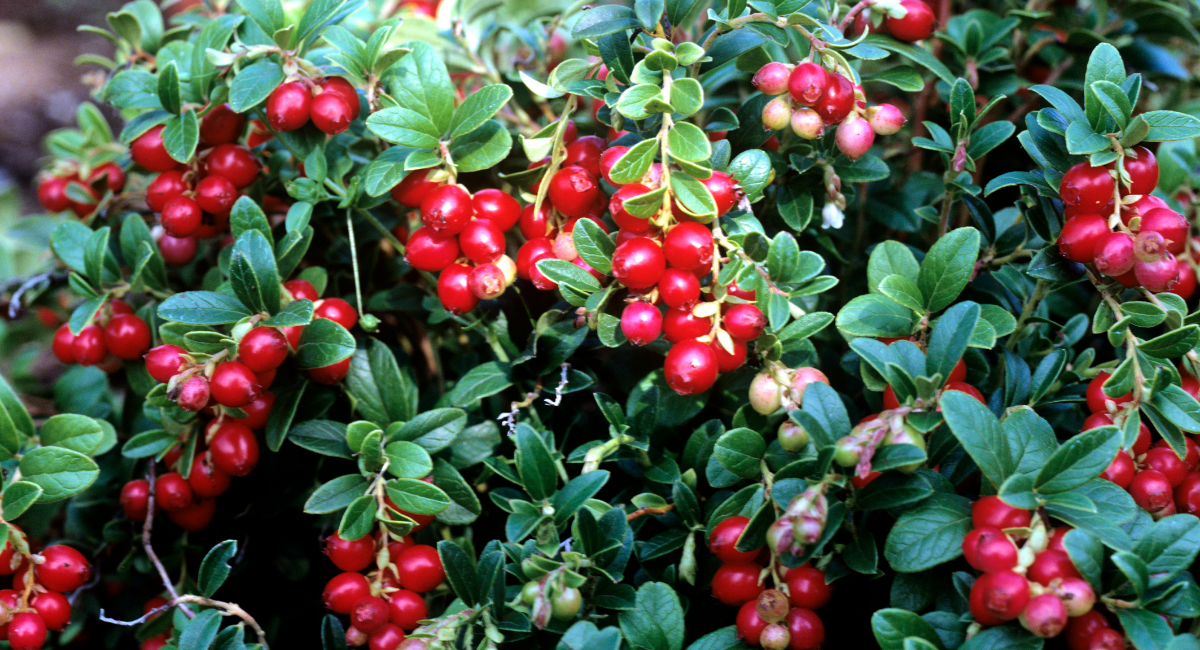
Diuretic, Antifungal, Anti-inflammatory, Antioxidant, Antimicrobial
Polyphenolics, Flavonoids (quercetin, catechins), Anthocyanins

This Site is for Educational Use Only: The information on this page is for educational and informational purposes only and is not intended as medical advice, diagnosis, or treatment. I am not a licensed medical professional. Always consult a qualified healthcare provider before using any medicinal plants, especially if you are pregnant, nursing, taking medications, or have a medical condition.
Cranberry gets called in almost exclusively for UTIs and honestly that's underselling it significantly. Yes, it helps with UTIs. But it's also doing a lot more than sitting around waiting for a urinary tract infection to show up.
Cranberries are high in B vitamins, specifically B1, B2, B3, and B6, and are a good source of vitamin C. The flavonoids they contain give them solid antioxidant activity. And perhaps most interestingly, they can reduce C-reactive protein, which is the main marker of systemic inflammation in the body. That's a meaningful thing. C-reactive protein levels are what doctors look at to assess how much inflammation is happening throughout your whole system, and being able to address that through something as accessible as cranberry is genuinely useful.
So yes, keep reaching for cranberry when a UTI shows up. But also consider that you're getting B vitamins, antioxidant activity, and systemic inflammation support at the same time. It's doing a lot quietly in the background.
Safety note: Cranberry is very well tolerated for most people. If you're on blood thinners, particularly warfarin, flag it with your provider as cranberry can affect how that medication works. Juice forms often contain significant added sugar, so if you're managing blood sugar or looking for the more concentrated benefit, supplements or unsweetened juice are worth considering over the standard cocktail variety.
Cranberry: Chemical Composition, Antioxidant Activity and Impact on Human Health: Overview https://pmc.ncbi.nlm.nih.gov/articles/PMC8911768/
Cranberry for Prevention of Urinary Tract Infections https://www.aafp.org/pubs/afp/issues/2004/1201/p2175.html
Vaccinium macrocarpon (Cranberry)-Based Dietary Supplements: Variation in Mass Uniformity, Proanthocyanidin Dosage and Anthocyanin Profile Demonstrates Quality Control Standard Needed https://pmc.ncbi.nlm.nih.gov/articles/PMC7230672/
Cranberry https://www.nccih.nih.gov/health/cranberry
Immunity Boosting Foods by Donna Beydoun Mazzola, PhD
Disclaimer: The content on this website is provided for informational and educational purposes only and is not a substitute for professional medical advice, diagnosis, or treatment. No provider-patient relationship is created by use of this site. The author makes no representations regarding the accuracy or completeness of the information and assumes no liability for any adverse effects resulting from the use of plants or remedies described herein.

Who wrote it? What are their credentials? Who published it and why? A wellness blog and a peer-reviewed journal are not the same thing, even when they say the same words. Always click through to the original source.

Science updates over time. A 2003 study on a supplement may have been contradicted twelve times since. Always look for the publication date and whether newer research exists. "Studies show" means nothing without a timestamp.

Who funded the study? A supplement company funding research on their own supplement is a conflict of interest. It's not automatically a disqualification, but worth noting. Look for the "funding" or "disclosures" section of any study you read.

Not all research is equal. A randomized controlled trial carries more weight than a case study or an animal study. "A study found..." could mean ten people in a lab or a decade-long population study. Big difference.

If only one source is saying something, be skeptical. If ten independent sources across different institutions, different countries, different decades are saying the same thing, you're getting warmer. Consensus is earned, and studies should be peer reviewed.

The National Institutes of Health database (PubMed) is free and searchable. Examine.com aggregates supplement research without selling anything. Both are significantly more reliable than any wellness influencer, including me.