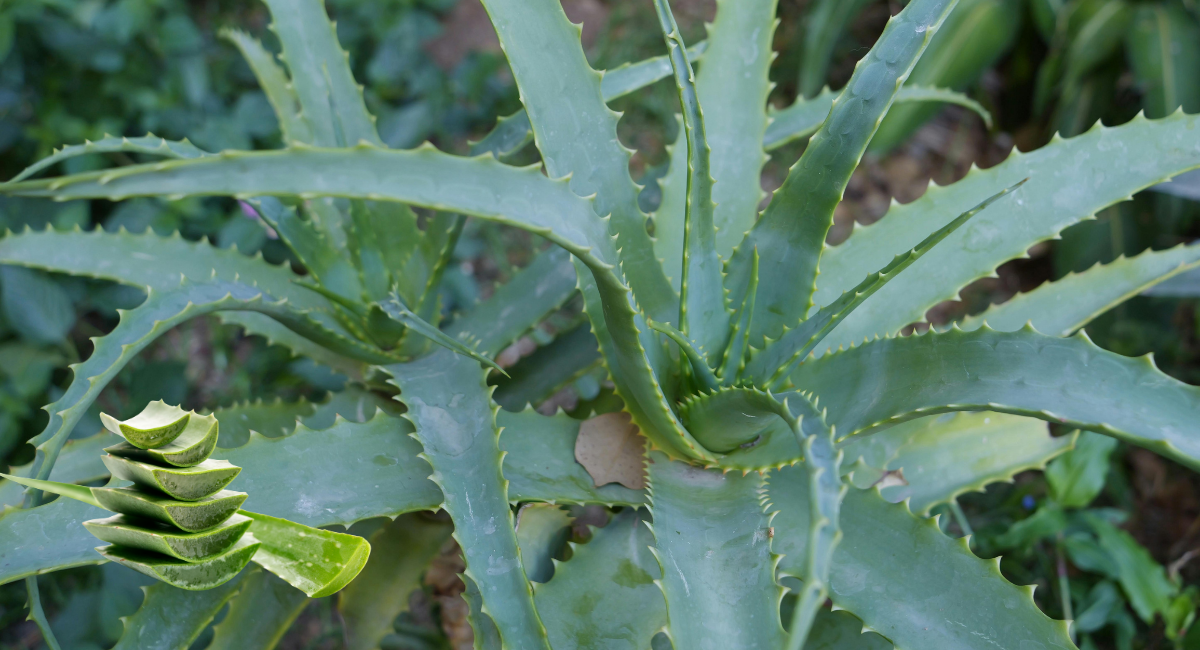
Antimicrobial, Wound healing, Antioxidant, Anti-inflammatory, Laxative (latex)
Aloin glycosides, Anthraquinones, Phenolic antioxidants, Saponins, Salicylic acid

This Site is for Educational Use Only: The information on this page is for educational and informational purposes only and is not intended as medical advice, diagnosis, or treatment. I am not a licensed medical professional. Always consult a qualified healthcare provider before using any medicinal plants, especially if you are pregnant, nursing, taking medications, or have a medical condition.
Aloe vera (Aloe barbadensis miller) is probably already in your house. It's one of those plants that crossed over from herbal medicine into mainstream first aid so completely that most people don't even think of it as a medicinal plant anymore. It's just the green tube under the bathroom sink or in the fridge door.
But it earns its place there. Aloe is genuinely one of the better options for burns, sunburns especially, and for general skin inflammation. And you don't need the tube version if you have the plant. You can snap a leaf open and apply the gel directly, which is honestly more satisfying and more potent. I keep one in my kitchen specifically for this. I don't sunburn, but I do get allergic skin reactions, and having a bottle of aloe in my fridge is a life saver.
Beyond burns, aloe gel can be dabbed onto aching teeth and mouth sores, and rinsing your mouth daily with the gel (followed by a plain water rinse) may help with gingivitis. It heals tissue, which is the through line connecting all of these uses.
Internally, aloe vera juice has proposed immune and digestive benefits and is widely available in health food stores. This is where a little more care comes in though. Many species of aloe are used medicinally, but some are toxic, and not all preparations are created equal. If you're foraging or making your own internal preparation, you need to be certain of your species and your process. When in doubt, talk to a practitioner before taking it internally.
Safety note: Aloe is considered very safe topically for most people, but allergies do exist. Testing a small amount on your inner wrist before applying it to a larger area is a smart first step, especially if you have sensitive or reactive skin. For internal use, species and preparation matter significantly. Do not assume all aloe products or plants are interchangeable.
Aloe Vera https://www.nccih.nih.gov/health/aloe-vera
Pharmacological Update Properties of Aloe Vera and its Major Active Constituents https://pmc.ncbi.nlm.nih.gov/articles/PMC7144722/
Herbal Remedies by Andrew Chevallier
Disclaimer: The content on this website is provided for informational and educational purposes only and is not a substitute for professional medical advice, diagnosis, or treatment. No provider-patient relationship is created by use of this site. The author makes no representations regarding the accuracy or completeness of the information and assumes no liability for any adverse effects resulting from the use of plants or remedies described herein.

Who wrote it? What are their credentials? Who published it and why? A wellness blog and a peer-reviewed journal are not the same thing, even when they say the same words. Always click through to the original source.

Science updates over time. A 2003 study on a supplement may have been contradicted twelve times since. Always look for the publication date and whether newer research exists. "Studies show" means nothing without a timestamp.

Who funded the study? A supplement company funding research on their own supplement is a conflict of interest. It's not automatically a disqualification, but worth noting. Look for the "funding" or "disclosures" section of any study you read.

Not all research is equal. A randomized controlled trial carries more weight than a case study or an animal study. "A study found..." could mean ten people in a lab or a decade-long population study. Big difference.
If only one source is saying something, be skeptical. If ten independent sources across different institutions, different countries, different decades are saying the same thing, you're getting warmer. Consensus is earned, and studies should be peer reviewed.

The National Institutes of Health database (PubMed) is free and searchable. Examine.com aggregates supplement research without selling anything. Both are significantly more reliable than any wellness influencer, including me.