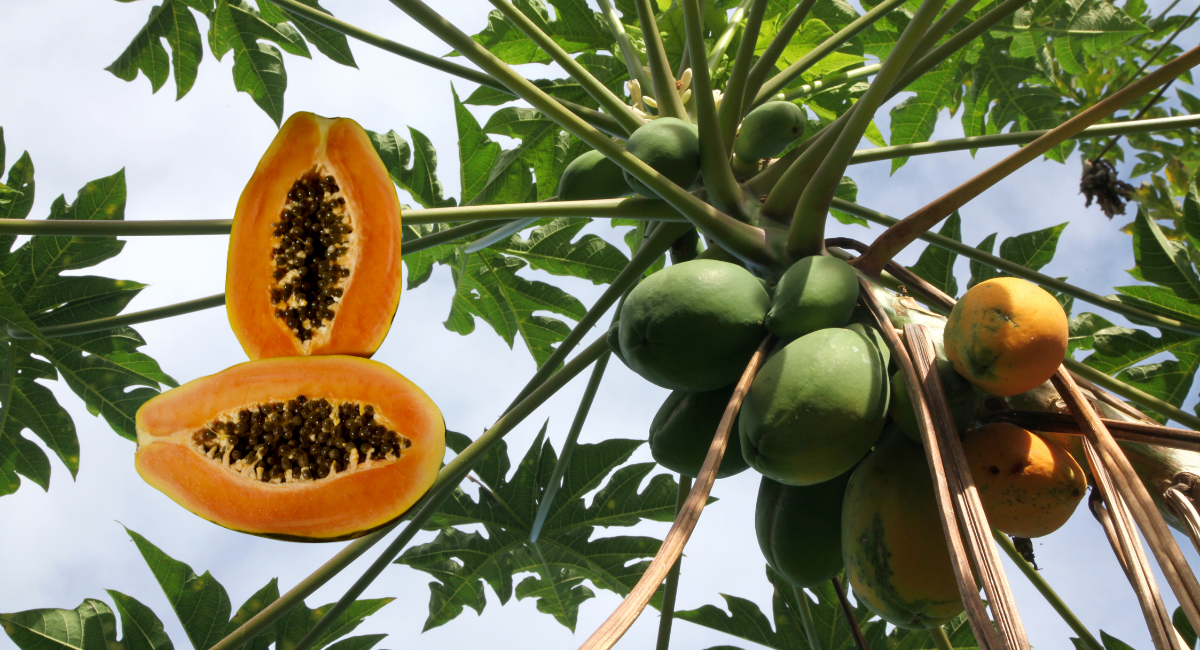
Anti-inflammatory, Digestive aid, Antimicrobial, Antispasmodic, Abortifacient (traditional use)
Proteolytic enzymes (papain), Polyphenolics (vanillin, catechins), Cyanoglycosides (seeds)

This Site is for Educational Use Only: The information on this page is for educational and informational purposes only and is not intended as medical advice, diagnosis, or treatment. I am not a licensed medical professional. Always consult a qualified healthcare provider before using any medicinal plants, especially if you are pregnant, nursing, taking medications, or have a medical condition.
Papaya has been used in Ayurvedic medicine for thousands of years, and modern research is finding some pretty compelling reasons why.
The real story here is the enzymes. Papaya contains unique enzymes including papain, chymopapain, and caricain, which have immunomodulatory and anti-inflammatory effects. Papain specifically works by reducing TGF-beta, which is a signaling protein involved in immune regulation and inflammation. It also contains the alkaloids nicotine and choline, which contribute additional anti-inflammatory activity by reducing the inflammatory cytokines that get released by an unregulated immune system. And similar to turmeric and willow bark, it reduces inflammation by blocking NF-kappa beta, which is the same pathway NSAIDs target. At this point we have several plants in this database working that same pathway, which says a lot about how many routes nature found to the same destination before pharmaceutical companies did.
Beyond the enzyme activity, papaya is a mild laxative and has been traditionally used to treat worms. The enzyme papain also breaks down protein in an alkaline environment, which makes it particularly useful within the small intestine for digestive support and protein processing.
Safety note: Do not take during pregnancy. Papaya has possible abortifacient properties, meaning it may stimulate uterine contractions, and concentrated forms especially should be avoided entirely while pregnant. As always, if you're managing an immune condition or on immunosuppressant medications, the immunomodulatory activity here is worth flagging to your provider.
Beneficial Role of Carica papaya Extracts and Phytochemicals on Oxidative Stress and Related Diseases: A Mini Review https://pmc.ncbi.nlm.nih.gov/articles/PMC8066973/
Phytomedical Properties of Carica papaya for Boosting Human Immunity Against Viral Infections https://pmc.ncbi.nlm.nih.gov/articles/PMC11861161/
Carica papaya L. Leaves: Deciphering Its Antioxidant Bioactives, Biological Activities, Innovative Products, and Safety Aspects https://pmc.ncbi.nlm.nih.gov/articles/PMC9203216/
Effect of papaya (Carica papaya linn) on pregnancy and estrous cycle in albino rats of Wistar strain https://pubmed.ncbi.nlm.nih.gov/680941/
Immunity Boosting Foods by Donna Beydoun Mazzola, PhD
Herbal Remedies by Andrew Chevallier
Disclaimer: The content on this website is provided for informational and educational purposes only and is not a substitute for professional medical advice, diagnosis, or treatment. No provider-patient relationship is created by use of this site. The author makes no representations regarding the accuracy or completeness of the information and assumes no liability for any adverse effects resulting from the use of plants or remedies described herein.

Who wrote it? What are their credentials? Who published it and why? A wellness blog and a peer-reviewed journal are not the same thing, even when they say the same words. Always click through to the original source.

Science updates over time. A 2003 study on a supplement may have been contradicted twelve times since. Always look for the publication date and whether newer research exists. "Studies show" means nothing without a timestamp.

Who funded the study? A supplement company funding research on their own supplement is a conflict of interest. It's not automatically a disqualification, but worth noting. Look for the "funding" or "disclosures" section of any study you read.

Not all research is equal. A randomized controlled trial carries more weight than a case study or an animal study. "A study found..." could mean ten people in a lab or a decade-long population study. Big difference.

If only one source is saying something, be skeptical. If ten independent sources across different institutions, different countries, different decades are saying the same thing, you're getting warmer. Consensus is earned, and studies should be peer reviewed.

The National Institutes of Health database (PubMed) is free and searchable. Examine.com aggregates supplement research without selling anything. Both are significantly more reliable than any wellness influencer, including me.