Antioxidant, Dermatologic support, Adaptogen, Cholesterol-lowering, Cognitive support, Anti-inflammatory, Wound healing support, Collagen production support, Venous circulation support, Anxiolytic
Terpenoids, Essential oils, Phenolics, Saponins, Flavonoids

This Site is for Educational Use Only: The information on this page is for educational and informational purposes only and is not intended as medical advice, diagnosis, or treatment. I am not a licensed medical professional. Always consult a qualified healthcare provider before using any medicinal plants, especially if you are pregnant, nursing, taking medications, or have a medical condition.
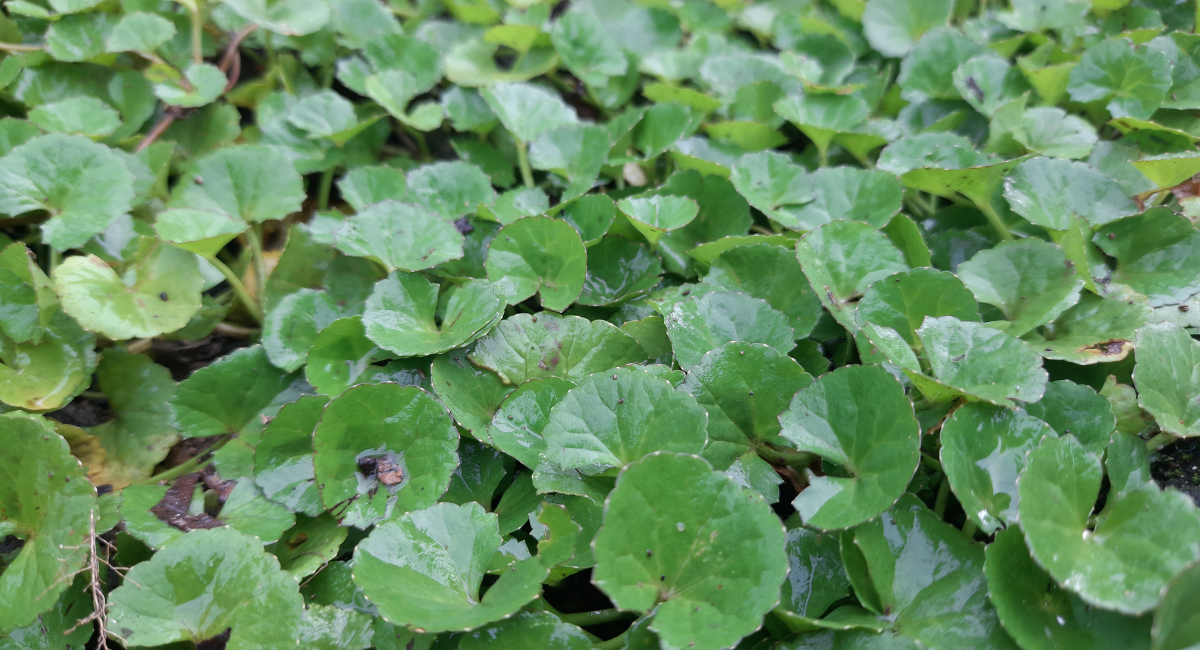
Gotu kola (Centella asiatica) has been a cornerstone of Ayurvedic medicine in India for thousands of years, which puts it in the company of some of the most time-tested plants in this database. The whole plant is used, not just the root or the flower, which already tells you something about how much it has to offer.
In Eastern medicine, gotu kola is perhaps best known for its effect on the mind. It's traditionally used to strengthen memory and concentration, support mental clarity, and calm the nervous system. Maybe I'll just make myself a cup of gotu kola tea for my next study day. Western herbal medicine has been slower to pick up on the cognitive angle and has focused more on its wound healing and skin applications, which are well documented. Skin rashes, general irritation, and topical wound repair are where it gets the most attention in Western practice. Both traditions are looking at the same plant and finding different things to appreciate, which is part of what makes gotu kola worth paying attention to as research continues to develop.
One of its more specialized proposed uses is vein and circulatory support. Gotu kola may strengthen and tone vein walls, and it is commonly prescribed in European herbal medicine for leg ulcers and varicose veins specifically. This is actually one of the better researched applications, and it is an area where studies are likely to tell us more as interest grows. The potential here feels like it is just getting started.
It can be prepared as a tincture or made into a topical lotion depending on what you are using it for. The cognitive and circulatory benefits are better addressed internally, while skin and wound applications translate well to topical use.
Safety note: Gotu kola can cause gastric irritation in some people, so starting with a lower dose and seeing how your stomach responds is a smart approach. As with several plants in this database, allergic reactions are possible, so patch testing before topical application is always worth doing. This is also one where the studies have real room to grow, meaning what we know now is promising but not complete. Approaching it with appropriate curiosity rather than total certainty is the right posture for now.
Pharmacological Review on Centella asiatica: A Potential Herbal Cure-all https://pmc.ncbi.nlm.nih.gov/articles/PMC3116297/
Centella asiatica (L.) Urban: From Traditional Medicine to Modern Medicine with Neuroprotective Potential https://pmc.ncbi.nlm.nih.gov/articles/PMC3359802/
Herbal Remedies by Andrew Chevallier
Disclaimer: The content on this website is provided for informational and educational purposes only and is not a substitute for professional medical advice, diagnosis, or treatment. No provider-patient relationship is created by use of this site. The author makes no representations regarding the accuracy or completeness of the information and assumes no liability for any adverse effects resulting from the use of plants or remedies described herein.

Who wrote it? What are their credentials? Who published it and why? A wellness blog and a peer-reviewed journal are not the same thing, even when they say the same words. Always click through to the original source.

Science updates over time. A 2003 study on a supplement may have been contradicted twelve times since. Always look for the publication date and whether newer research exists. "Studies show" means nothing without a timestamp.

Who funded the study? A supplement company funding research on their own supplement is a conflict of interest. It's not automatically a disqualification, but worth noting. Look for the "funding" or "disclosures" section of any study you read.

Not all research is equal. A randomized controlled trial carries more weight than a case study or an animal study. "A study found..." could mean ten people in a lab or a decade-long population study. Big difference.

If only one source is saying something, be skeptical. If ten independent sources across different institutions, different countries, different decades are saying the same thing, you're getting warmer. Consensus is earned, and studies should be peer reviewed.

The National Institutes of Health database (PubMed) is free and searchable. Examine.com aggregates supplement research without selling anything. Both are significantly more reliable than any wellness influencer, including me.